
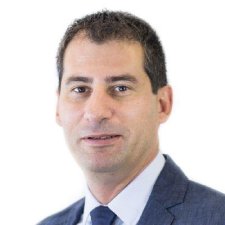
ICEPTP Plenary Speaker
Dr. Frederic Coulon, Cranfield University, UK
Professor Coulon’s professional interests include: soil and water chemistry; fate and transport of chemicals in surface and subsurface waters; water and wastewater treatment; soil and sediment treatment; hazardous waste site remediation; energy and environment; population and environment; and public communication of environmental science and engineering. He has a track record in transdisciplinary research and he is recognised for his internationally leading contribution in Environmental Science and Bioengineering with a significant contribution towards the elucidation of chemical and biological processes in complex systems. His research has been supported by grants from industrial, government and Research Council sources, with core grant research support primarily being from BBSRC, NERC, Defra and EU. His work further influences policy development and provides pragmatic, risk-based solutions to remediate contaminated land. He has published numerous articles in leading environmental engineering and science journals; book chapters and articles for the popular press with substantive contributions to oil remediation, process emission and control at industrial sites and environmental risk management.
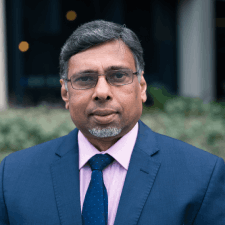
ICGRE Plenary Speaker
Dr. Jayantha Kodikara, Monash University, Australia
Professor Jayantha Kodikara is the Director of ARC Hub for Smart Next Generation Transport Pavements – SPARC (www.sparchub.org.au) within Monash Civil Engineering. He is also the leader of the Monash Pipeline Research Group. He has published over 500 publications on diverse topics and has graduated over 50 PhD students. He is a Chartered Professional Engineer in Australia and a Fellow of Engineers Australia. His fundamental research has led to the development of the MPK (Monash-Peradeniya-Kodikara) Framework and Model for unsaturated compacted soil modelling, which uncovered a direct link between the traditional compaction curve and advanced unsaturated soil modelling. Seminal contributions in applied research include elucidating the mechanisms underlying buried water pipe failure and deterioration, leading to global paradigm shifts in pipeline asset management. He has received several awards for innovation and industry collaboration, including the National and International Water Association Awards and the B/HERT Award in 2016; the ARRB Impact Award in 2019; and the Monash Vice-Chancellor’s and Dean’s Awards for Innovation and Enterprise in 2013 and 2019, and the Excellence in Postgraduate Supervision Award in 2024.
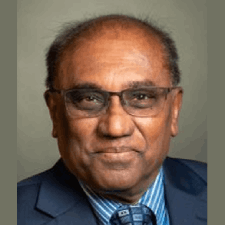
ICGRE Plenary Speaker
Dr. Pinnaduwa Kulatilake
University of Arizona, USA – Plenary Speaker
Dr. Pinnaduwa H.S.W. Kulatilake has been a Professor Emeritus at the University of Arizona, USA since June 2019. He was a recipient of 2024 International Society for Rock Mechanics and Rock Engineering (ISRM) Science Achievement Award. At present, he is (a) a Professor of Civil Engineering at the Christian Brothers University, USA, (b) a Consultant as a Research Director to Shandong University of Science & Technology, China, and (c) a Visiting Professor at National Institute of Technology, Jalandhar, India. Currently, he serves as the Chair of the ISRM Commission on “Estimation of Rock Mass Strength and Deformability” and as the President of the Sri Lankan Rock Mechanics and Engineering Society. His Ph.D. degree is in Civil Engineering with a Geotechnical Engineering specialty from the Ohio State University, USA. From May 2019 for 3 years he served as a Distinguished Professor of Rock Mechanics and Rock Engineering at a University in China under the Distinguished Foreign Expert 1000 Talent Program funding from the Chinese Government. Prof. Kulatilake has over 47 years of experience in rock mechanics & rock engineering with applications of numerical, probabilistic, and statistical methods to civil, mining, and geoengineering. He has taught 56 short courses covering all 6 continents. He has organized and run 5 international conferences as the Chair. He has published more than 280 papers which have resulted in more than 9525 Google Scholar Citations with an H-index of 58 and an I10-index of 123. He has co-authored a book on “Rock mass stability around underground excavations in a mine” He has edited six conference proceedings and served as the Guest Editor for two special issues in an international journal. He has delivered more than 40 invited keynote lectures and 50 other invited lectures throughout the world. He is a recipient of 14 prestigious awards. He is a registered professional civil engineer and has served for over 20 years as the primary or sole examiner for the geological engineering professional exam conducted by the Arizona State Board of Technical Registration. His research accomplishments resulted in securing invited and elected positions on the editorial boards of several journals. He has been a Visiting Professor/Research Fellow at several top geomechanics institutes in the world.
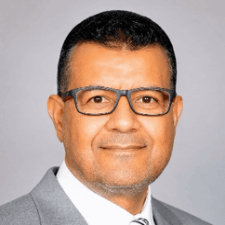
Dr. Mohamed Shahin
Curtin University, Australia – Plenary Speaker
Professor Mohamed Shahin is a Professor of Geotechnical Engineering at Curtin University, Australia. He holds BSc and MSc degrees from Cairo University, Egypt, and a PhD from the University of Adelaide, Australia. He has more than 30 years of academic and industrial experience in Civil and Geotechnical Engineering. He is an Elected Fellow of the American Society of Civil Engineers and Engineers Australia. He is recognized among the top 1% of Highly Cited Researchers in Engineering (Web of Science), the top 2% of World Scientists (Stanford University ranking), the top 0.5% of worldwide scholars (ScholarGPS), and Oceania’s top 100 civil engineering scientists (AD Scientific Index). He has received several honours and awards, including the 2025 Senior Researcher of the Year Award (Curtin University); the 2025 Excellent Regional Contribution Award (International Association for Computer Methods & Advances in Geomechanics); the 2023 Scientist Medal (International Association of Advanced Materials); the 2018 Fredlund Award (Canadian Science Publishing); the 2016 Editor’s Choice Paper Award (Canadian Geotechnical Journal); and the 2013 Prix Quigley Award (Canadian Geotechnical Society).
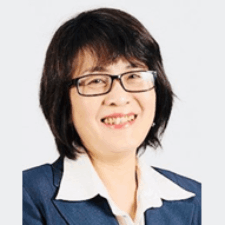
ICSECT Plenary Speaker
Dr. Yan Zhuge, Adelaide University, Australia
Dr. Yan Zhuge is Bradley Distinguished Professor in Structural Engineering at the School of Civil Engineering & Construction Management, Adelaide University. She has a BEng (Hons) in Civil Engineering and a Masters in Structural Engineering from Beijing, China, a PhD in Structural Engineering from Queensland University of Technology (QUT), Australia. Her primary research focuses on green concrete materials, waste utilization, fibre composite materials and structures. Yan has published 300+ SCI papers in the referred international journals and has been invited as a Plenary/keynote speaker at many international conferences. Her contributions have garnered several Australian government awards and fellowships and attracted funding from the Australian Research Council (ARC) as well as industry partnerships. Yan has held the position of a member in the ARC College of Experts 2019-2025 and was the winner of 2018 South Australia Winnovation award in Engineering category. Yan is an elected follow of Australian Academy of Technology and Engineering (ATSE). Her current H-index is 62 with 14,000+ Citation. She has been recognized by Stanford University since 2021 as one of the world’s top 2% scholars in the area of “Civil Engineering” for both current year and career-long impact.
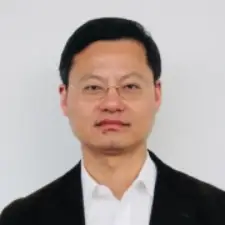
ICSECT Plenary Speaker
Dr. Jie Yang, RMIT University, Australia
Dr. Jie Yang is the Distinguished Professor in Engineering in the Mechanical and Automotive Engineering Discipline, School of Engineering, RMIT University. His main research interests include advanced composite structures, nanocomposites, metamaterials, structural stability and dynamics, smart structures and control. He is an author of over 560 papers, including 430 international journal papers and over 130 conference papers, having attracted 35300 Google Scholar citations with an H-index 102. He is the Highly Cited Researcher (Cross Field) in 2019, 2020, 2021, 2022, 2023, and 2025 by Clarivate Analytics and named by Australian Research Magazine as the Global Field Leader in Mechanical Engineering in 2020, Australia’s Research Field Leader in Mechanical Engineering in 2019, 2020, 2021, 2022 and 2023, in Structural Engineering in 2021, and in Acoustics & Sound in 2023. Prof. Yang is the recipient of Nishino Medal in 2026 and the Lead Editor-in-Chief of Engineering Structures and an Editorial Board Member of Mechanics of Advanced Materials and Structures, Thin-Walled Structures, International Journal of Structural Stability and Dynamics, Scientific Reports, and Materials.
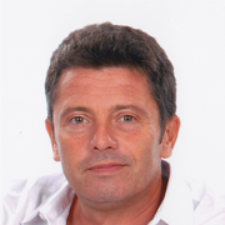
ICSECT Keynote Speaker
Dr. Ivo CALIO’, University of Catania, Italy
Full professor of Dynamics of Structures, joined at the University of Catania as researcher in 1997. Since his PhD, he has extensively worked on nonlinear analysis methods for dynamic structural analysis, and this research, extended to the modelling of whole masonry and reinforced concrete building behavior under earthquake loadings. He participated in several scientific projects aimed at investigating the seismic assessment of existing concrete and masonry building not designed to resist to earthquake loading. Currently he coordinates a research group for developing alternative macro-element numerical strategies, suitable both for practical engineering purposes and academic investigations. The main results of these researches have being implemented in two structural analysis program 3DMacro, for masonry and mixed reinforced concrete and masonry buildings and HiStrA (Historical Structures Analysis) focused on the Structural Assessment of Historical Monumental Structures and Masonry Bridges subjected to extreme loadings or unexpected events. He is associate editor of the international journal Shock & Vibratio