

Dr. Hany El Naggar, Ph.D., P.Eng., is a Professor of GeoStructural Engineering at Dalhousie University with more than 25 years of experience in civil construction, geotechnical and structural engineering and research in Canada and overseas. He has participated in several geotechnical and structural investigations and is experienced in the analysis and design of foundations and soil- structure interaction of buried infrastructure.
Dr. El Naggar and his research team has investigated the soil-structure interaction (SSI) effects around buried infrastructure; explored innovative use of tire derived aggregate (TDA) as a buffer zone to create stress arching and reduce demand on rigid culverts, proposed an earth pressure reduction system using geogrid reinforced platform bridging system to reduce stresses on buried utilities, and developed innovative “cellular” precast concrete pipe system. Also, He has developed a simplified technique to account for the group Effect in pile dynamics; and closed form solutions for the moments and thrusts in jointed and un-jointed composite tunnel lining systems, designed several foundation systems ranging from machine foundations subjected to dynamic loads to raft foundations for underground structure, as well as several tunnels and underground structures in Canada, Europe, Middle East, and the United States. The findings from Dr. El Naggar’s research have been reported in more than 130 technical publications covering both experimental and numerical work in the fields of soil-structure interaction, buried infrastructure and concrete pipes.
Dr. El Naggar’s research work on the seismic performance of corrugated steel plate culverts led to changing the seismic provisions of the new version of the Canadian Highway Bridge Design Code (CHBDC, 2019) to include rigorous dynamic analysis for flexible buried structures in zones of high seismicity. Besides, his work on the modelling of rigid pipes is featured in the CHBDC (2019) as an example of the best practice in the modelling of buried concrete structures. Dr. El Naggar is the recipient of the 2016-2017 Outstanding Teaching Award from the Faculty of Engineering, Dalhousie University. In addition, he received the 2005-2006 Outstanding Teaching Award from the Department of Civil and Environmental Engineering at Western. Dr. El Naggar won the 2006 L. G. Soderman Award, the 2005 R.M. Quigley Award, and the 2004 Milos Novak Memorial Award.Dr. El Naggar is the current chair of the Buried Structures Committee of the Canadian Society of Civil Engineers (CSCE); also, he is a member of the technical committee on buried structures of the Canadian Highway Bridge Design Code (CHBDC). In addition, he is a member of several professional associations including the Association of Professional Engineers of Nova Scotia; the Association of Professional Engineers of Ontario (PEO); the Canadian Society of Civil Engineering (CSCE), the Canadian Geotechnical Society (CGS); the International Society for Soil Mechanics and Geotechnical Engineering (ISSMGE); and the Engineers Syndicate, Egypt.
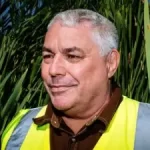
University of Portsmouth, UK
Congress Chair
I graduated from Kingston Polytechnic in 1988, with a BSc (Hons) degree in Resources Science. I then came to Portsmouth Polytechnic to undertake a PhD examining nitrogen cycling and pathogen removal in constructed wetlands in the UK and Egypt, which was awarded in 1993 by the newly established University of Portsmouth. I then stayed at Portsmouth to do a post-doc examining the application of constructed wetlands to industrial wastewater and worked on various projects in Egypt, South America and Europe.
I have stayed at the University of Portsmouth ever since, becoming Lecturer, Senior Lecturer and Principal Lecturer, before being promoted to Reader in 2015 and Professor in 2017.
During my time at Portsmouth I have led many projects in collaboration with industry, supported by funding from a range of sources such as Innovate UK and (as was) RCUK. My work on constructed wetlands has extended to monitoring and modelling vegetated sustainable drainage systems (SuDS), starting with the A34 Newbury Bypass (Mott MacDonald) and then to SuDS in housing developments (Mayer Brown/InnovateUK and NERC). I have also worked on many wastewater treatment projects including the characterisation of fatberg deposits (WRc/EPSRC) and assessing the fate of pharmaceuticals (Astra Zeneca/EPSRC).
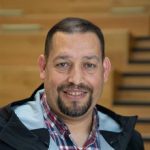
Dr Hemida has more than ten years of working experience in both academia and industry running research projects that involve steady and unsteady simulations of single and multiphase flows. He has a PhD in Train Aerodynamics and a Licentiate (Diploma) of Engineering in the field of Thermofluids. Although he has focused much of his work on wind loads on ground vehicles, he has conducted other successful projects that involve multiphase flow, heat transfer, combustion, mass transfer and shape optimization.
He has also been a university teacher and a teaching assistant for many academic courses (graduate and undergraduate levels) such as Computational Fluid Dynamics (CFD), Environmental Fluid Mechanics, Applied Fluid Dynamics, Heat Transfer, and Thermodynamics as well as a principle supervisor for a large number of undergraduate students.
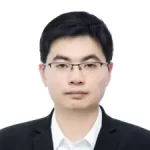
Dr. Xue Zhang, a senior lecturer in the University of Liverpool and a Fellow of the Higher Education Academy, earned his PhD in geotechnical engineering from the University of Newcastle, Australia, in 2014. Following this, he served as a Research Associate at the Australian Research Council Centre of Excellence for Geotechnical Science and Engineering (Newcastle, Australia). Dr. Zhang then expanded his expertise as a Marie Curie fellow at the International Centre for Numerical Methods in Engineering (Barcelona, Spain). Currently a faculty member at the University of Liverpool, UK, his research focuses on computational geomechanics, specialising in geohazard modelling and geostructure design. His research has been funded by the UK Engineering and Physical Sciences Research Council (EPSRC), the Royal Society and the EU Horizon programme. He serves on the editorial boards of Computers and Geotechnics and the Journal of Rock Mechanics and Geotechnical Engineering.